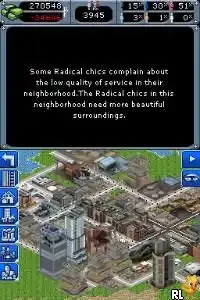
Play City Life DS (Europe) (En,Fr,De,Es,It) online! It is one of the top-rated Nintendo DS games you can play for free. No download, emulator, or setup required—jump straight into the action directly in your browser and start playing this classic in seconds.
Exploring the Core Gameplay Mechanics of City Life DS
Released for the Nintendo DS, City Life DS brings the thrill of city planning to handheld gamers. Players engage in creating and managing a vibrant metropolis, focusing on balancing the demands of residents while expanding the city. This strategic simulation challenges players to build housing, commercial areas, and public utilities while responding to varying needs and preferences. The difficulty lies in maintaining a harmonious equilibrium among different societal factions, making each gaming session unpredictable and engaging.
One of the game’s standout mechanics is the tiered population system. As players develop their city, they unlock various demographic types—from low-income to affluent citizens—each with unique requirements and desires. The interplay between these demographics introduces layers of complexity, demanding that players not only address basic needs but also delve into luxury amenities and services. The rich simulation invites creativity, urging players to experiment with urban layouts and infrastructure to create a unique environment that thrives amidst challenges.
The Historical Significance and Legacy of City Life DS
Launched in Europe in the late 2000s, City Life DS emerged during a pivotal era for simulation games. As the genre was gaining popularity, this title stood out by effectively utilizing the DS’s touchscreen capabilities, which allowed for intuitive controls that enriched the gameplay experience. Unlike its console counterparts, it offered portability without sacrificing depth, appealing to on-the-go gamers eager for a rewarding simulation experience.
Its unique blend of cultural influences and the incorporation of real-world socio-economic elements resonated with players, encouraging them to think critically about urban planning. Over the years, this title has seen a revival among retro gaming enthusiasts, celebrated for its innovative approach and enduring appeal. From fostering creativity to strategic thinking, its design elements forged a lasting legacy in the genre, inspiring future city-building titles.
Reasons for Continued Nostalgia
The nostalgic value of City Life DS can be attributed to several factors: its captivating gameplay, the creativity it fosters, and the intricate balancing act of city management. Players fondly recall the thrill of developing their own vibrant communities, echoing the culturally rich urban environments they often aspire to recreate in real life.
Conclusion
In summary, City Life DS remains a beloved title not just for its engaging gameplay but also for its role in evolving the city-building simulation genre. By integrating complex societal dynamics with intuitive controls, it left an indelible mark on gamers’ hearts. Its legacy continues to inspire and challenge new generations of players, ensuring that this classic remains a vibrant part of gaming history.