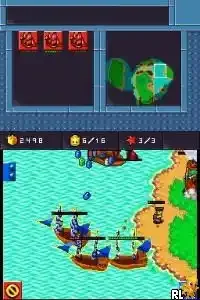
Play LEGO Battles (USA) (En,Fr,Es) online! It is one of the top-rated Nintendo DS games you can play for free. No download, emulator, or setup required—jump straight into the action directly in your browser and start playing this classic in seconds.
Introduction to LEGO Battles
The nostalgia tied to LEGO Battles is palpable, invoking memories of childhood creativity while also marking a significant chapter in the evolution of strategy games. Released in 2009, this innovative title seamlessly combines the imaginative world of LEGO with engaging real-time strategy mechanics. Players embark on an adventurous quest, controlling colorful brick-built armies to conquer diverse landscapes and defeat opponents. The game distinguished itself not only through its rich visuals but also by enhancing the strategy genre’s appeal to a broader audience.
Core Gameplay Mechanics
LEGO Battles offers players an engaging experience that emphasizes strategic planning and resource management. Drawing inspiration from classic strategy games, players build their armies by utilizing various LEGO minifigures and vehicles, each with unique abilities. The combat mechanics are straightforward yet deep, allowing players to engage in tactical battles across multiple terrains. In addition to fighting enemies, players must manage construction and resource collection efforts, showcasing the blend of construction elements with combat that defines the game.
What makes the gameplay particularly compelling is its accessibility; it welcomes both veterans familiar with strategy gaming and newcomers longing for a unique entry point. Each battle presents a challenge, requiring players to adapt their strategy quickly to counter various foes. Furthermore, the single-player campaign is enhanced by multiplayer options, enabling cooperative gameplay experiences that elevate the game’s replayability.
Historical Context and Legacy
Released during a time when both LEGO and video games were experiencing immense popularity, LEGO Battles represents a significant convergence of these two cultural phenomena. Developed by TT Games, the company expertly captured the essence of LEGO’s charm while incorporating essential gameplay innovations. The game was instrumental in attracting a younger audience to the strategy genre, emphasizing inclusivity in gaming. It paved the way for further LEGO video games, establishing a rich framework for future titles.
Over the years, the title has maintained its relevance within retro gaming communities, often referenced in discussions about impactful childhood games. Its creative approach to merging building mechanics with combat remains a touchstone for many developers aspiring to craft immersive gaming experiences. The lasting fondness for LEGO Battles underscores its essential role in LEGO gaming history.
The Enduring Appeal
- Accessible gameplay for all ages
- Unique blend of strategy and creativity
- Multiplayer options enhance social interaction
Conclusion
LEGO Battles continues to resonate with both nostalgia-driven gamers and new players alike, embodying the spirit of creativity and strategy that LEGO promotes. Its innovative design, combined with engaging gameplay mechanics, ensures that this title will endure in the hearts of fans for years to come. Whether revisiting the game or experiencing it for the first time, players discover a magical blend of fun and strategy that is timeless in the gaming landscape.