Play Scribblenauts (USA) (En,Fr,Es,Pt) online! It is one of the top-rated Nintendo DS games you can play for free. No download, emulator, or setup required—jump straight into the action directly in your browser and start playing this classic in seconds.
Embracing Creativity Through Gameplay
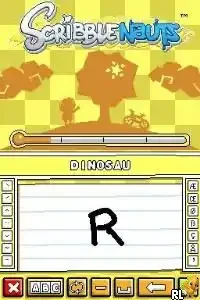
Scribblenauts revolutionized gaming by turning traditional puzzle-solving on its head. Released in 2009 for the Nintendo DS, this innovative title invited players to unleash their creativity in a unique, sandbox-style environment. Players are tasked with solving challenges by writing words that transform into objects, creatures, or actions, offering a refreshing take on gameplay mechanics. The premise allows for endless possibilities, encouraging imaginative thinking and pushing the boundaries of conventional gaming.
Historical Context and Design Innovations
Developed by 5th Cell, Scribblenauts was released as a part of the 2009 Fall gaming lineup, quickly carving a niche for itself among a sea of action-oriented titles. It became a commercial success, bolstered by critical acclaim, and was hailed as a pioneer of “interactive storytelling” through user-generated content. The game utilized an intricate and robust word recognition system that could handle a vast array of nouns and adjectives, creating dynamic interactions within the game’s world. This innovation not only captivated players but also later influenced a generation of educational games and creative software.
The Game’s Cultural Impact
Scribblenauts is more than just a game; it’s a cultural phenomenon that inspired other titles and mediums to embrace creative expression. Its success led to sequels and spin-offs, showcasing the game’s enduring popularity. In classrooms, the game has even been used to foster language skills and imaginative play, demonstrating its crossover appeal beyond traditional gaming. This enduring legacy is a testament to the game’s ability to adapt and inspire, making it a timeless treasure in the gaming world.
Why Scribblenauts Is Still Relevant Today
Even over a decade after its release, Scribblenauts continues to evoke nostalgia among players. It remains a staple recommendation for those interested in imaginative gameplay. Its intuitive mechanics and open-ended nature encourage exploration and creativity, traits often overlooked in modern game design. Moreover, its influence can be seen in various games that embrace similar concepts of creativity and problem-solving. In summary, the game’s innovative approach and active community continue to play a significant role in its status as a classic, ensuring its place in gaming history.