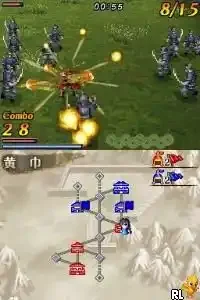
Play Shin Sangoku Musou DS – Fighter’s Battle (Japan) online! It is one of the top-rated Nintendo DS games you can play for free. No download, emulator, or setup required—jump straight into the action directly in your browser and start playing this classic in seconds.
Gameplay Mechanics and Difficulty
The immersive experience of Shin Sangoku Musou DS captivates players with its fast-paced combat and strategic depth. This title draws from the famed Dynasty Warriors franchise, integrating its signature hack-and-slash style while adapting it for the portable Nintendo DS platform. The game features an array of playable characters, each equipped with unique abilities and fighting styles. Players dive into combat scenarios that require not only reflexes but also tactical planning to defeat numerous enemies on the battlefield.
Its difficulty varies, offering a challenge that appeals to both newcomers and seasoned gamers. Players can tailor their experience by choosing different difficulty levels, which enhances replayability. The controls are streamlined for the DS, making executing combos effortless, yet maneuvering through crowded battlefields can become a test of skill under pressure. This balance between accessibility and challenge is a hallmark that keeps players returning for more.
Historical Release Background
Released in Japan as a part of a beloved franchise, Shin Sangoku Musou DS made waves upon its debut in 2006. The game was strategically positioned within an era of handheld gaming, showcasing the unique capabilities of the Nintendo DS. With its dual-screen feature, the game offered an expansive view of battles and an enriched interface for character management, setting it apart from its console counterparts.
This innovation resonated with fans of the series, as it continued the legacy of epic narratives set against the backdrop of ancient Chinese history. The game embodied the spirit of the era, bringing legendary figures from the Three Kingdoms period to life in a way that gamers had never seen before on a handheld device. Its success paved the way for future titles within the series, solidifying its place in gaming history.
Cultural Impact and Legacy
The legacy of Shin Sangoku Musou DS endures, influencing countless other titles in the action genre. It introduced a generation of players to the rich lore of the Three Kingdoms while simultaneously reinforcing the appeal of character-driven storytelling. Additionally, it fostered a community around competitive play, with fans often discussing strategies and character choices long after its release.
Many gamers remember it fondly for its vibrant graphics and engaging gameplay, ensuring that this classic title will be revisited by both veterans and newcomers alike. Its unique charm continues to captivate, reminding us why nostalgic games hold a cherished place in our hearts.