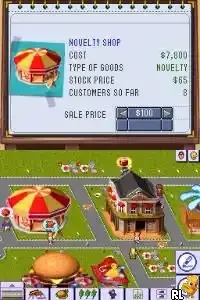
Play Theme Park (USA) (En,Ja,Fr,De,Es,It) online! It is one of the top-rated Nintendo DS games you can play for free. No download, emulator, or setup required—jump straight into the action directly in your browser and start playing this classic in seconds.
Exploring the Gameplay of Theme Park
Theme Park offers players a chance to become masterful park managers, blending resource management with creative design. Players can craft their dream amusement parks, balancing exhilarating rides, snack stands, and visitors’ satisfaction. The complexity lies in efficiently managing finances while ensuring the park attracts a steady stream of guests. From thrill rides to peaceful carousels, players must thoughtfully arrange attractions to optimize foot traffic and engagement.
The gameplay is not only rewarding but can also be challenging; striking a balance between the park’s aesthetic and functionality can be daunting. Players must adjust ticket prices, maintain rides, and keep an eye on customer happiness levels — an early reflection of the simulation genre’s deep engagement mechanics.
A Journey Through History
Released in the early days of the ’90s, Theme Park was a groundbreaking title that set the stage for future simulation games. Developed by Bullfrog Productions and published by Electronic Arts, it introduced gamers to a world where creativity met management. The game was initially launched on platforms like DOS and Amiga, showcasing cutting-edge graphics for its time, which captivated audiences.
Its multi-regional appeal is evident, with versions available in various languages, including Japanese, French, and German. Each localization not only made the game accessible but also enriched the gaming experience, allowing diverse communities to create their parks. This approach helped solidify Theme Park’s place in gaming history, influencing countless successors in the simulation genre.
Cultural Impact and Legacy
Theme Park has left an indelible mark on the gaming landscape, inspiring a generation of players and developers alike. Its innovative blend of strategy and creativity birthed a sub-genre that thrives to this day. The allure of building and managing a theme park resonates deeply with fans of simulation games.
- Encouraged strategic thinking and planning.
- Fostered a sense of creativity through park design.
- Influenced many subsequent titles in the simulation genre.
Conclusion
Ultimately, the enduring charm of Theme Park lies in its unique gameplay and innovative approach to simulation. Its historical significance captures not only the essence of 90s gaming culture but also showcases the evolution of game design. As players revisit this classic title, its legacy remains a testament to the creativity and enjoyment that video games can provide, reminding us of simpler times filled with imaginative worlds to explore.