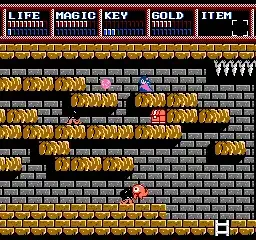
Play Dragon Slayer 4 – Drasle Family (Japan) online! It is one of the top-rated Nintendo Entertainment System games you can play for free. No download, emulator, or setup required—jump straight into the action directly in your browser and start playing this classic in seconds.
Exploring the Gameplay of Dragon Slayer 4
At its core, Dragon Slayer 4 merges classic RPG elements with thrilling action mechanics, captivating players with a rich narrative. The gameplay deeply immerses users in the fantasy world, allowing them to experience intense battles and intricate level designs. Players control characters from the legendary Drasle family, each possessing unique abilities and attributes. The challenge increases as players navigate through treacherous environments filled with formidable enemies and hidden treasures.
The game is renowned for its high difficulty level, requiring strategic planning and quick reflexes. Players must master various combat techniques, from basic attacks to powerful spells. Timely dodges and tactical maneuvering are essential to overcoming bosses and accessing secret areas. Dragon Slayer 4 does not shy away from demanding skill, which has led to a lasting admiration among retro gaming enthusiasts. Its impact on subsequent RPGs can be seen in design choices that balance difficulty with rewarding gameplay.
Historical Significance and Innovations
Released in the late 1980s, Dragon Slayer 4 marked a significant milestone in the evolution of role-playing games. As part of the renowned Dragon Slayer series from Nihon Falcom, it built upon its predecessors while introducing cutting-edge graphics and sound for that era. The game’s design integrated vibrant visuals that brought its fantasy world to life, greatly enhancing player immersion.
Incorporating innovative mechanics, such as real-time combat and a dynamic storyline, Dragon Slayer 4 set a new standard for RPGs. Its blend of linear and open-world elements inspired many titles that followed. The ability to customize character skills and the introduction of rich backstories for each member of the Drasle family expanded narrative depth, a feature that resonated with players seeking more than mere hack-and-slash mechanics.
Cultural Impact and Legacy
The influence of Dragon Slayer 4 extends far beyond its original release. It has cultivated a dedicated fanbase that celebrates its nostalgic charm while influencing modern game design. Game developers often cite its mechanics and storytelling as benchmarks in the industry.
- Pioneered real-time combat in RPGs
- Expanded narrative complexity with character backgrounds
- Set a benchmark for difficulty and gameplay balance
In conclusion, Dragon Slayer 4 not only paved the way for future generations of RPGs but also crafted an enduring legacy that continues to inspire video game creators today. Its unique blend of challenging gameplay and rich storytelling makes it a hallmark of retro gaming, ensuring it remains a beloved classic in the hearts of many long after its initial release.