Play Shadow of the Ninja online! It is one of the top-rated Nintendo Entertainment System games you can play for free. No download, emulator, or setup required—jump straight into the action directly in your browser and start playing this classic in seconds.
Long before cinematic ninja epics became a genre staple on consoles, Shadow of the Ninja quietly delivered one of the most polished and atmospheric action-platformers on the NES. Released by Natsume in 1990, the game has spent decades in the shadow of bigger names like Ninja Gaiden, yet it has steadily earned a reputation among retro gaming fans as a hidden gem worth rediscovering. This guide breaks down everything you need to know about Shadow of the Ninja, from its story and characters to its gameplay mechanics and lasting legacy.
What Is Shadow of the Ninja?
Shadow of the Ninja is a side-scrolling hack-and-slash platformer developed and published by Natsume for the Nintendo Entertainment System in 1990. In Japan, it was released under the title Yami no Shigotonin Kage, while European and Australian audiences knew it as Blue Shadow. Despite the regional name changes, the core game across all versions remained the same: a fast, dark, and stylish action title blending ninja combat with a dystopian sci-fi setting.
The game was often compared to Tecmo’s Ninja Gaiden at the time of release, and while it borrowed visual and design cues from several contemporary NES titles, it carved out its own identity through tight two-player cooperative play and inventive weapon mechanics.
The Story: Ninjas Versus a Futuristic Dictator
Set in the then-futuristic year of 2029, the story imagines a United States seized by the tyrannical Emperor Garuda, who has built his stronghold in the ruins of a sprawling, mechanized New York City. To end his reign of terror and avenge the countless lives lost under his rule, two skilled ninja from the Iga clan, Hayate and Kaede, infiltrate the dictator’s fortress with one goal: eliminate Garuda and free the country from his grip.
It’s a straightforward premise, but the game’s moody cyberpunk visual direction, combining feudal ninja imagery with crumbling futuristic architecture, gives the story a distinct flavor rarely seen in other action titles from the same era.
Meet the Ninjas: Hayate and Kaede
Players can choose between two protagonists, each visually distinct but functionally similar in combat capability:
- Hayate – The blue-clad male ninja, one of the Iga clan’s finest warriors.
- Kaede – The red-clad female ninja, equally lethal and skilled in combat.
Both characters can run, jump, crouch, and hang from railings, giving the game a strong sense of vertical mobility that was ahead of its time. The title also supports two-player cooperative play, letting a second player join in as the other ninja, with shared continues between both players if health runs out.
Weapons and Combat Mechanics
Shadow of the Ninja’s combat system revolves around weapon variety and upgrades rather than special magic or techniques. Both ninjas begin with a short, quick sword, but breakable weapon pods scattered throughout each level grant access to alternative arms, including a longer, slower chain weapon, throwing shurikens, and bombs.
Collecting multiples of the same weapon powers it up, dramatically changing how it behaves. A fully upgraded sword can fire cutting energy waves at range, while stacked shurikens gain homing capability, rewarding players who commit to a single weapon type rather than constantly switching. This upgrade system, paired with the ability to scale and flip over horizontal bars, gave the game a level of platforming depth that few NES action titles matched at the time.
Level Design and Structure
The game is structured across five distinct levels split into fourteen total stages, with the first four levels divided into three stages each and the final level condensed into two. Environments shift dramatically from level to level, ranging from a rain-soaked ship deck to the ruins of a fractured cityscape, to mechanical interiors packed with gears and moving machinery. One especially memorable stage takes place around a ruined Statue of Liberty, a set piece that has stuck with players since release.
Health carries over between stages rather than fully resetting, and defeating a boss releases a healing explosion that restores vitality to nearby players, an unusual risk-reward mechanic that rewards aggressive, close-quarters boss fights. Running out of health costs a life, with five total continues shared between both players in co-op mode.
Critical Reception and Reputation
At launch, Shadow of the Ninja received largely positive coverage, with contemporary outlets praising its detailed graphics and fast-paced action. Retrospective reviews have been more mixed but generally favorable, with many critics and retro gaming historians now considering it an overlooked classic that stands confidently alongside better-known NES action titles, even if it doesn’t quite reach the heights of Ninja Gaiden in narrative presentation.
Its reputation has only grown over time, aided by frequent digital re-releases that introduced the game to new generations of players who missed it during its original 1990 run.
Legacy and Modern Availability
Shadow of the Ninja has enjoyed a long life beyond its original NES cartridge release. It was re-released as a Virtual Console title on the Wii in 2010, followed by re-releases on Nintendo 3DS and Wii U in 2015, and later through the Nintendo Switch Online service in 2020. A planned Game Boy port was eventually reworked into an entirely different game, Ninja Gaiden Shadow, after Tecmo acquired the publishing rights.
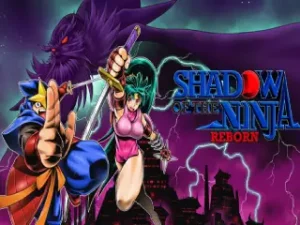
Most notably, the franchise saw a full revival with Shadow of the Ninja: Reborn, a modern remake released in 2024 for Nintendo Switch, PlayStation 4, PlayStation 5, Windows, and Xbox Series X/S, introducing the classic ninja duo and their cyberpunk battle against Emperor Garuda to an entirely new audience.
Why Shadow of the Ninja Still Deserves Attention
Shadow of the Ninja represents a fascinating piece of NES history: a game built on familiar influences that nonetheless carved out a memorable identity through atmosphere, weapon-upgrade mechanics, and cooperative play. Its dark, mechanized take on the ninja genre, combined with genuinely inventive combat systems, explains why it has aged into a cult favorite rather than fading into obscurity. For anyone exploring the deeper cuts of the NES library, this is one action-platformer that fully earns its rediscovery.
Frequently Asked Questions
1. Who developed Shadow of the Ninja and when was it released?
Shadow of the Ninja was developed and published by Natsume for the Nintendo Entertainment System in 1990. It was released in Japan as Yami no Shigotonin Kage and in Europe as Blue Shadow.
2. How many playable characters does Shadow of the Ninja have?
The game features two playable ninjas, Hayate and Kaede, who can be controlled individually or simultaneously in two-player cooperative mode, sharing continues if either player runs out of health.
3. Is Shadow of the Ninja related to Ninja Gaiden?
The two games are not directly connected, though Shadow of the Ninja was frequently compared to Ninja Gaiden upon release due to similarities in tone and genre. A planned Game Boy port of Shadow of the Ninja was later reworked into a separate title, Ninja Gaiden Shadow, after Tecmo acquired the publishing rights.
4. Can I play Shadow of the Ninja on modern consoles?
Yes. The original game has been re-released through Virtual Console on Wii, Nintendo 3DS, and Wii U, as well as through Nintendo Switch Online. A full remake, Shadow of the Ninja: Reborn, was also released in 2024 for Nintendo Switch, PlayStation 4, PlayStation 5, Windows, and Xbox Series X/S.