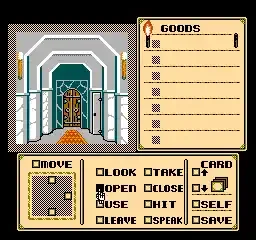
Play Shadowgate (USA) online! It is one of the top-rated Nintendo Entertainment System games you can play for free. No download, emulator, or setup required—jump straight into the action directly in your browser and start playing this classic in seconds.
Exploring the Gameplay Mechanics of Shadowgate
Shadowgate is a classic point-and-click adventure game that made an indelible mark in the gaming community during its initial release in the late 1980s. Developed for the Apple Macintosh, NES, and various other platforms, it offered players a unique blend of puzzle-solving and exploration wrapped in a gothic fantasy setting. Players assume the role of a courageous hero tasked with defeating a malevolent sorcerer. The game’s significant challenge lies in the intricate puzzles and numerous potential dead ends, demanding both clever thinking and memory from players. The unforgettable atmosphere and haunting soundtrack immerse players in a world teeming with magic and mystery, making each interaction feel consequential.
The Historical Significance of Shadowgate
Released in 1987 by in-house development teams at ICOM Simulations, Shadowgate was groundbreaking for its time. The game combined text-based commands with visual storytelling in a way that captivated audiences, paving the way for future interactive narrative experiences. One of the game’s innovations was its use of a graphical user interface, allowing for a more user-friendly experience compared to its competitors. This level of interactivity, coupled with an engaging narrative, set the stage for many future adventure titles. Over the years, Shadowgate has built a lasting legacy, inspiring several remakes and sequels that aim to capture the original’s magic while introducing updated mechanics for modern audiences.
Cultural Impact and Its Lasting Legacy
The cultural relevance of Shadowgate extends beyond its initial popularity. The game’s unique blend of horror and adventure has etched it into the annals of gaming history. Fans appreciate its compelling narrative and charmingly retro graphics, which evoke a sense of nostalgia for the 8-bit and 16-bit eras. Various online forums celebrate the game, reminiscing about the challenges faced and the thrills experienced. Its influence can also be seen in modern titles that prioritize narrative depth and immersive environments, proving that even decades later, Shadowgate remains a benchmark for adventure games.
Conclusion
In summary, Shadowgate represents a pivotal moment in gaming history that has shaped the landscape of adventure games. Its challenging gameplay mechanics, innovative design, and cultural impact ensure it remains a cherished title among gamers of all ages. The legacy of this game is not just about the thrill of escaping a castle filled with traps and puzzles, but rather, its role in pushing the boundaries of interactive storytelling. As we celebrate the evolution of gaming, Shadowgate stands as a timeless testament to creativity and innovation.