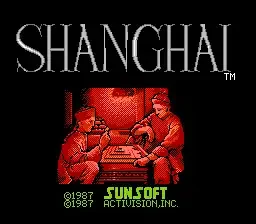
Play Shanghai (Japan) (Sample) online! It is one of the top-rated Nintendo Entertainment System games you can play for free. No download, emulator, or setup required—jump straight into the action directly in your browser and start playing this classic in seconds.
Exploring the Gameplay of Shanghai
The puzzle mechanics of Shanghai have captivated players since its inception, blending traditional tile-matching gameplay with a unique level of strategy and foresight. Players must match pairs of identical tiles, removing them from the board while navigating a maze of increasingly complex arrangements. As the game progresses, the challenge escalates with the introduction of tiles stacked in various layers, requiring not only quick thinking but also a grasp of spatial awareness. The design is deceptively simple, yet the layers of strategy elevate the experience, making it engaging for casual players and seasoned strategists alike.
The Historical Significance of Shanghai
Launched in the late 1980s, Shanghai marked a significant moment in gaming history. It introduced many players to the concept of tile-matching puzzles, a genre that would grow in popularity through the decades. Developed by a Japanese company, the game took inspiration from traditional Chinese Mahjong, incorporating its elegant aesthetic and intricate designs. This cultural blend not only piqued interest in the game itself but also helped usher in a wave of puzzle games in the market. Over the years, Shanghai has inspired numerous sequels and adaptations, proving its lasting influence in the gaming community.
Cultural Impact and Legacy
Beyond gameplay, Shanghai has left a profound cultural imprint. Its combination of Eastern aesthetics with modern gaming has resonated with a global audience. Today, it remains a nostalgic favorite, often cited as a classic among puzzle enthusiasts. Its gameplay mechanics laid the groundwork for various other games in the genre, demonstrating its innovative approach to designing player experience. As a symbol of early puzzle games, it continues to be celebrated in retrospectives and gaming conventions around the world.
- Introduced tile-matching mechanics
- Blended cultural aesthetics of Mahjong
- Influenced future puzzle game designs
- Strong nostalgic appeal among gamers
In conclusion, the enduring legacy of Shanghai exemplifies the fusion of culture and gameplay innovation that has shaped modern gaming. Its simple yet strategic mechanics have captivated audiences for decades, ensuring that it remains a beloved title in the realm of retro gaming. Whether a newcomer or a veteran gamer, Shanghai invites players to engage with its rich tapestry of tiles and challenges, solidifying its place in the annals of gaming history.