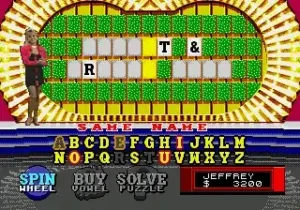
Play Wheel of Fortune online! It is one of the top-rated SEGA CD games you can play for free. No download, emulator, or setup required—jump straight into the action directly in your browser and start playing this classic in seconds.
Exploring the Core Gameplay Mechanics
Wheel of Fortune is not just a game of chance; it cleverly blends luck with strategy. Players spin a large wheel to determine their fate, hoping to land on high-value spaces while avoiding bankrupts. The essence of the game lies in guessing letters to solve word puzzles, reminiscent of a crossword challenge intertwined with classic game show thrills. It requires not only a keen sense of vocabulary but also an analytical approach to the various letters that may or may not unfold throughout the game.
The format invites players of all levels, featuring intuitive gameplay that captivates both seasoned gamers and newcomers. The integration of themes and categories adds layers of complexity while maintaining accessibility. This duality is part of what has made the game a beloved staple across generations. Over the years, various adaptations have been released, each introducing unique twists to gameplay mechanics, yet retaining the original core essence that fans adore.
A Legacy Rooted in History
First airing in 1975, the show’s influence extended far beyond television. The introduction of video game adaptations brought Wheel of Fortune into homes in various formats, with its arcade version hitting the scene in the early ’80s. The game’s transition from a physical wheel to a digital format marked a significant milestone in the gaming community. Not only did it democratize access to the game, but it also showcased advancements in technology and design, paving the way for more interactive gameplay experiences.
The franchise has produced numerous iterations, from console games to mobile applications. Each release consistently reflects the cultural zeitgeist, often incorporating contemporary themes, phrases, and trends. This adaptation has allowed the game to remain relevant over decades, transcending generations and appealing to fans of all ages. The nostalgia associated with the game, coupled with its ever-evolving nature, is a testament to its enduring charm and adaptability in a fast-paced gaming market.
The Everlasting Cultural Impact
- Iconic game show format that shaped entertainment.
- Introduced memorable catchphrases and themes.
- Fostered a sense of community among players.
In conclusion, Wheel of Fortune stands as a shining example of how a game can bridge generations through its engaging gameplay and rich historical context. Its ability to adapt to technological advancements while maintaining core elements keeps fans returning for more. The blend of strategy and luck, alongside its significant cultural impact, ensures that this game remains not just a relic of the past but a vibrant part of the gaming landscape, evoking nostalgia and excitement for players around the world.