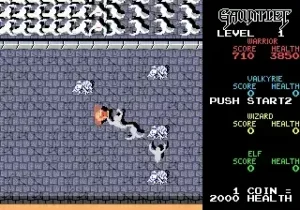
Play Gauntlet (Japan) (En,Ja) online! It is one of the top-rated SEGA Genesis games you can play for free. No download, emulator, or setup required—jump straight into the action directly in your browser and start playing this classic in seconds.
Unraveling the Core of Gauntlet’s Gameplay
Gauntlet, released in the late 1980s, revolutionized the multiplayer dungeon-crawling experience. This iconic title introduced players to an immersive world filled with monsters, treasure, and intense co-op gameplay. The mechanics allowed up to four players to dive into dungeons, each choosing from distinct characters such as the Warrior, Wizard, Valkyrie, and Elf. Each character’s unique abilities demanded teamwork, leading to frantic cooperative sessions that are still fondly remembered today.
The game featured a unique health system where players continuously lost health while traversing levels, increasing the stakes and requiring players to work together for survival. This design element not only raised tension but also added layers of strategy, pushing players to balance offense with defense. In essence, Gauntlet didn’t just focus on defeating foes; it emphasized collaboration, a feature that set it apart from many contemporary titles.
The Historical Significance of Gauntlet
Developed by Atari Games, Gauntlet was initially released as an arcade cabinet in 1985, becoming a significant cultural phenomenon. At a time when most arcade games focused on single-player experiences, Gauntlet challenged norms by encouraging players to gather in groups. Its design paved the way for future cooperative multiplayer games, signifying a crucial shift in game development.
Beyond its gameplay mechanics, Gauntlet left a lasting legacy in pop culture. Its memorable catchphrases, such as “Wizard needs food, badly,” echoed through gaming circles and continue to be referenced today. As arcade gaming waned in the early 90s, the game was adapted for various home consoles, ensuring its accessibility and reminding players of its frantic cooperative fun.
Key Innovations and Cultural Impact
- First multiplayer dungeon-crawler to blend action and strategy.
- Introduced a health system that fostered teamwork.
- Rich character variety, allowing diverse playstyles.
A Timeless Classic
<pDecades after its release, Gauntlet remains a pillar in retro gaming discussions. Its innovative approach to multiplayer action and cooperative strategy has influenced a multitude of games in various genres. While technology has evolved, the core exhilarating gameplay and the camaraderie it fostered continue to resonate with fans old and new. As we celebrate its legacy, Gauntlet remains a beloved token of gaming history—a testament to the enduring spirit of adventure and collaboration in video games.