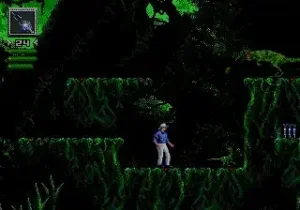
Play Jurassic Park online! It is one of the top-rated SEGA Genesis games you can play for free. No download, emulator, or setup required—jump straight into the action directly in your browser and start playing this classic in seconds.
When Jurassic Park hit theaters in 1993, Sega made sure fans could experience Isla Nublar’s chaos at home, and the Genesis version stood out from the pack in one particularly memorable way: it let players control a Velociraptor. Developed by BlueSky Software and published by Sega, this side-scrolling action-platformer became one of the most talked-about movie tie-ins of the 16-bit era, delivering a surprisingly ambitious dual-perspective adventure that still holds a nostalgic place in the hearts of Genesis fans. Here’s everything worth knowing about this dinosaur-filled classic.
What Is Jurassic Park (Sega Genesis)?
Jurassic Park is an action-adventure side-scrolling platformer developed by BlueSky Software and published by Sega for the Sega Genesis, released in the United States on August 10, 1993. The game arrived as a tie-in to Steven Spielberg’s blockbuster film adaptation of Michael Crichton’s novel, and it notably incorporated story elements and locations pulled directly from Crichton’s original book rather than sticking solely to the movie’s events.
Rather than being a simple port shared across platforms, the Genesis version was developed as its own distinct project, separate from the versions released for the SNES, NES, Game Boy, and Sega CD around the same time. The Genesis edition holds a notable place in gaming history as the first title to use Sega’s newly introduced ratings system, receiving a General Audiences (GA) rating.
Play as Dr. Alan Grant… or a Velociraptor
The defining feature that set BlueSky’s Jurassic Park apart from its competitors was its dual-character structure. From the main menu, players could choose to control either Dr. Alan Grant, the paleontologist protagonist of the film, or a Velociraptor, each offering an entirely different campaign, moveset, and objective.
As Grant, players scavenge Isla Nublar for non-lethal weapons like tranquilizer guns, stun guns, and gas grenades, along with health items, as he attempts to navigate across seven distinct areas of the island to reach the Visitor’s Center and escape by helicopter. As the Velociraptor, the goal flips entirely: the raptor is faster and can jump higher than Grant, relying purely on teeth and claws to fight through park security guards and stray dinosaurs while making its own way toward the Visitor’s Center, this time attempting to corner Grant rather than help him. The Raptor’s campaign is notably shorter than Grant’s, spanning five levels compared to Grant’s full seven-area journey.
Development Behind the Scenes
Both Acclaim Entertainment and Activision reportedly bid for the rights to develop the Sega Genesis version of Jurassic Park, but Sega ultimately secured the license itself, handing development duties to BlueSky Software. The project took over 15 months to complete, an unusually long production cycle for a 16-bit game at the time, and the development team included Doug TenNapel, who would later go on to create Earthworm Jim, serving as lead artist.
The game’s dinosaur models were notably created using stop-motion photography techniques, while Grant’s in-game animations were produced by digitizing footage of a team member acting out his movements, giving the Genesis version a distinctive visual style compared to other 16-bit platformers of the era.
Gameplay: Platforming, Puzzles, and Boss Battles
At its core, Jurassic Park follows a standard side-scrolling action-platformer structure, guiding players from platform to platform while collecting weapons and health items scattered throughout each level. Along the way, players navigate environments straight out of the film and novel, including dense jungles, the park’s power station, a jungle river area, a pump house, and other iconic Isla Nublar locations.
The game also features boss encounters against some of the franchise’s most dangerous dinosaurs, including confrontations with the Tyrannosaurus Rex, alongside enemies like the spitting Dilophosaurus. Players begin with three lives, and dying sends them back to the start of the current level, adding a layer of tension to the platforming challenges throughout.
Critical Reception
Jurassic Park received a mixed but largely positive critical response at launch. Reviewers praised its impressive 16-bit visuals and sound design, with one contemporary analyst noting that Sega had combined the best elements of 16-bit gaming into the title, while Entertainment Weekly’s Bob Strauss simply called the game “a blast.” A later retrospective review from AllGame praised the game’s graphics, dual-character structure, and dinosaur AI, calling it “a rare find” despite its movie tie-in origins.
Not every assessment was as kind, some contemporary press felt the game failed to fully capture the excitement of its source material, and later retrospectives, including a 2005 X-Play segment, criticized it as a disappointing movie adaptation. Even so, later comparisons by outlets like Game Informer and IGN judged the Genesis version favorably against its SNES counterpart, largely due to the unique ability to play as the Velociraptor.
Commercial Performance
Jurassic Park was a substantial commercial success for Sega. The game reportedly sold around 250,000 copies within its first week of release in the United States alone, generating approximately $13.8 million, a remarkable launch performance for a licensed 16-bit title in 1993.
The Sequel: Jurassic Park – Rampage Edition
Building on the original’s success, Sega and BlueSky released a sequel in 1994 titled Jurassic Park: Rampage Edition, exclusive to the Genesis. Despite carrying “Rampage Edition” in its name, this was a full sequel rather than an updated re-release, continuing Grant’s story directly after his escape from the island is interrupted, forcing him to return to Isla Nublar to stop InGen agents from stealing genetic material. The sequel retained the raptor-versus-human dual-campaign structure but shifted toward faster, more combat-focused gameplay designed to be less frustrating than the original’s platforming challenges.
Legacy and Modern Re-Releases
Both the original Jurassic Park and Rampage Edition were preserved for modern audiences in 2023 through Jurassic Park: Classic Games Collection, published by Limited Run Games for Nintendo Switch, PlayStation 4, PlayStation 5, and Xbox Series X/S. The collection introduced quality-of-life improvements including save states and in-game maps, making both Genesis titles more accessible than ever for new generations of players revisiting Isla Nublar.
Why This Game Still Has a Following
While it may not be remembered as the definitive Jurassic Park video game experience, BlueSky’s Genesis adaptation carved out a lasting niche thanks to its willingness to let players experience the story from the dinosaur’s perspective. That dual-campaign structure, combined with genuinely detailed 16-bit visuals for its time, has helped the game endure as a nostalgic favorite among Genesis collectors and fans of early 1990s movie tie-ins alike.
Frequently Asked Questions
1. Who developed the Sega Genesis version of Jurassic Park?
Jurassic Park for Sega Genesis was developed by BlueSky Software and published by Sega, released on August 10, 1993, as its own separate project distinct from the Jurassic Park games released on other platforms that year.
2. Can you really play as a Velociraptor in this game?
Yes. Players can choose to control either Dr. Alan Grant or a Velociraptor from the main menu, each with a distinct campaign, moveset, and objective. The Raptor is faster and jumps higher than Grant but can only attack using its teeth and claws in close combat.
3. Is Jurassic Park (Sega Genesis) based on the movie or the book?
The game draws from both sources. While it ties in with Steven Spielberg’s 1993 film adaptation, it also incorporates specific elements from Michael Crichton’s original novel, including certain locations and creatures not always emphasized in the movie itself.
4. Can I play Jurassic Park (Sega Genesis) on modern consoles?
Yes. Both the original Jurassic Park and its 1994 sequel, Jurassic Park: Rampage Edition, are available as part of Jurassic Park: Classic Games Collection, released in 2023 for Nintendo Switch, PlayStation 4, PlayStation 5, and Xbox Series X/S, complete with save states and in-game maps.