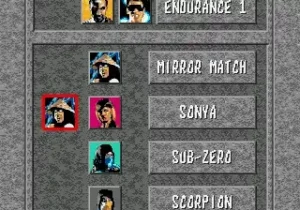
Play Mortal Kombat (World) (v1.1) online! It is one of the top-rated SEGA Genesis games you can play for free. No download, emulator, or setup required—jump straight into the action directly in your browser and start playing this classic in seconds.
Gameplay Mechanics and Difficulty
Mortal Kombat revolutionized the fighting game genre through its blend of visceral combat and unique gameplay mechanics. At its core, players select from a roster of diverse characters, each equipped with distinctive moves, combos, and fatalities—signature finishing moves that became synonymous with the game. The fluidity of the combat, combined with intricate button combinations, offers a challenging experience that caters to both newcomers and seasoned players alike.
The game innovated with its emphasis on timing and spatial awareness, pushing players to master their chosen fighters. Characters like Scorpion and Sub-Zero introduced not just fan-favorite moves but also a narrative depth that appealed to players. The difficulty level is often cited as a significant factor in its long-lasting appeal, ensuring that players felt accomplished with each victory, yet challenged enough to keep returning to improve their skills.
Historical Background and Cultural Impact
Released in 1992 by Midway Games, Mortal Kombat marked a pivotal moment in video game history. It arrived during a burgeoning era for arcades, offering a dark, gritty alternative to more cartoonish fighters. Its graphics utilized digitized images of real actors, which shocked audiences at the time and set a new standard for realism in video games. This technical innovation not only attracted players but also made the game a talking point in competitive gaming circles.
The game ignited debates regarding violence in video games, leading to increased scrutiny and the eventual establishment of the Entertainment Software Rating Board (ESRB). Despite this controversy, or perhaps because of it, Mortal Kombat cemented its legacy as a cultural phenomenon. It spawned several sequels, adaptations in movies and TV shows, and a dedicated fanbase that continues to celebrate its iconic characters and memorable gameplay.
Why It Remains Relevant Today
Today, Mortal Kombat holds a respected place in gaming history, cherished for its engaging gameplay and rich lore. The franchise has evolved with technology, yet it retains a nostalgic charm. Regular updates and newer iterations have kept its fanbase thriving, proving that great design and immersive storytelling can transcend generations.
In a world increasingly dominated by fast-paced, online gaming, the legacy of Mortal Kombat endures. Its innovative gameplay and cultural significance not only shaped the fighting genre but also ensured its place in the hearts of gamers worldwide. The blend of nostalgia and modern advancements continues to forge a future for the franchise that seems as bright as its past.