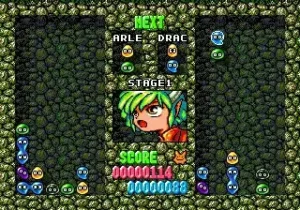
Play Puyo Puyo (Japan) online! It is one of the top-rated SEGA Genesis games you can play for free. No download, emulator, or setup required—jump straight into the action directly in your browser and start playing this classic in seconds.
Introduction to Puyo Puyo
Puyo Puyo is a vibrant puzzle game that revolutionized the genre in the 1990s, becoming a staple in competitive gaming circles. With its engaging mechanics and charming character designs, this title introduced players to a world where strategy meets quick thinking. Its unique gameplay and colorful aesthetic captured the hearts of players, paving the way for a series that continues to thrive decades later. As a cultural artifact, it offers insight into gaming evolution and community building in Japan and beyond.
Core Gameplay Mechanics and Difficulty
The gameplay of Puyo Puyo centers around matching blobs, referred to as “Puyos,” of the same color to make them disappear. Unlike traditional puzzle games, players can create chain reactions, leading to complex strategies and explosive gameplay moments. This mechanic not only rewards skillful play but also encourages continuous learning and adaptation, making it both challenging and addictive. The game’s difficulty increases as the player progresses, introducing advanced techniques and requiring quick reflexes to fend off opponents. The simplicity of its rules belies the depth of strategy involved, making it accessible yet challenging for players of all ages.
Historical Context and Cultural Impact
Released initially in 1991 by Compile, Puyo Puyo quickly garnered a following. It became a prominent fixture in arcades, spurring numerous sequels and adaptations across various platforms. The game’s significance soared in Japan, where it influenced not only game design but also the growing eSports scene. As a cultural phenomenon, *Puyo Puyo* helped shape the identity of puzzle gaming and foster community competitions, leading to friendly rivalries that are still celebrated today. Its legacy is evident in local gaming events and online competitions, where its spirited play continues to thrive.
Technical Innovations
The visual design and soundtracks of Puyo Puyo were groundbreaking for their time, using vibrant colors and catchy tunes to create an engaging atmosphere. The game’s user interface is intuitive, allowing players to focus on gameplay rather than navigation. The introduction of multiplayer modes encouraged social interaction, making it a favorite activity among friends. These technical advancements not only set a high standard for future games but also reinforced the importance of community and fun in gaming.
Conclusion
Today, Puyo Puyo stands as a testament to innovation in gaming, celebrated not just for its gameplay but also for its enduring impact on the puzzle genre and gaming culture. Its charming design, engaging mechanics, and deep-rooted community influence keep it relevant for new players while provoking nostalgia in veterans. As gaming continues to evolve, titles like *Puyo Puyo* remind us of the joy and connection that come from shared experiences and strategic challenges, ensuring its place in the annals of gaming history.