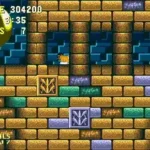
Play Saint Sword (Japan) online! It is one of the top-rated SEGA Genesis games you can play for free. No download, emulator, or setup required—jump straight into the action directly in your browser and start playing this classic in seconds.
Exploring the Gameplay Mechanics of Saint Sword
The release of Saint Sword in 1991 marked a significant milestone in the action RPG genre. Players dive into a colorful world filled with intricate level designs and challenging mechanics. The gameplay primarily revolves around platforming elements intertwined with hack-and-slash combat, requiring swift reflexes and strategic timing. With varied enemies and distinct bosses, players must adapt their approach to conquer formidable foes, keeping the challenge fresh throughout the game. The complexity of the levels demands not only skill but also a keen sense of exploration, revealing hidden power-ups and secrets that enhance gameplay.
One of the standout features of Saint Sword is its dual-character system, allowing players to switch between two protagonists. This mechanic adds a layer of strategic depth, as each character possesses unique abilities suitable for different situations. The game also cleverly uses checkpoints and health systems that balance difficulty, ensuring players remain engaged and motivated to push through each level. Overall, the innovative gameplay mechanics set a benchmark that influenced many future titles in the RPG landscape.
A Historical Perspective on Saint Sword
Developed by the renowned Masaya Games, Saint Sword was released exclusively in Japan for the Sega Mega Drive. The early ’90s were a transformative time for video games, with developers beginning to embrace more complex storytelling and gameplay mechanics. This title stands out not only for its engaging content but also as a representation of the technological advances of the time, with vibrant graphics and an unforgettable soundtrack that memorable enhances the player experience.
The game’s narrative focuses on the battle against dark forces threatening the realm, drawing players into its enchanting world. While it didn’t achieve the commercial success of other titles, the game cultivated a dedicated fanbase that appreciated its depth and innovation. As gaming technology has advanced, Saint Sword has been recognized in retrospectives for its role in shaping the action RPG genre, making it a significant piece of gaming history.
The Cultural Impact and Lasting Legacy
The enduring appeal of Saint Sword lies in its nostalgic charm and its ability to evoke memories for those who experienced it during its initial release. It serves as a reminder of a time when games were becoming not just entertainment, but an art form. The title has since spawned a cult following, with enthusiasts discussing strategies and rediscovering the game through emulation.
In conclusion, Saint Sword remains a vital cornerstone in the history of gaming, showcasing early innovations in design and mechanics while leaving a lasting impression on players. Its unique blend of engaging gameplay and rich storytelling continues to be celebrated, proving that true classics never fade away.