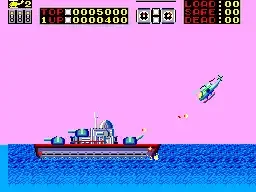
Play Choplifter (Japan) (Proto) online! It is one of the top-rated SEGA Master System games you can play for free. No download, emulator, or setup required—jump straight into the action directly in your browser and start playing this classic in seconds.
Core Gameplay Mechanics and Difficulty
Choplifter revolutionized the side-scrolling shooter genre when it first graced early home consoles. Players control a helicopter tasked with the dual mission of rescuing hostages and battling enemy forces. The gameplay intricacies lie in navigating through hostile environments while managing fuel levels and enemy attacks. As the game progresses, the difficulty ramps up significantly, requiring precise maneuvering and quick reflexes to succeed. Each level is replete with obstacles, encouraging players to devise strategies rather than relying solely on brute force.
Historical Release Background
Originally developed by Dan Gorlin and released in arcades in 1982, Choplifter quickly became a cultural phenomenon. Its transition to home consoles, particularly the Famicom in Japan, marked a significant milestone in gaming history. At a time when gameplay depth was often sacrificed for graphics, this title emphasized player engagement through its unique mechanics. The prototype version not only showcased early gaming tech but also laid the foundation for future helicopter-based games, influencing iterations in various genres for years to come.
Technical Innovations
Among its many features, Choplifter introduced groundbreaking mechanics like sprite flickering to create a sense of motion and realism. The game’s ability to blend tense action with strategic elements was a novel concept for its time. Players had to balance their offensive capabilities with stealth and strategy, making each mission a nuanced experience.
Conclusion
Today, Choplifter remains etched in the annals of gaming history not only for its challenging gameplay but also for its historical significance. Its pioneering approach to interactive storytelling and gameplay innovation left an undeniable mark on future titles. As gamers play the classics, Choplifter is celebrated for its lasting influence, ensuring that it will always hold a special place in the hearts of retro gaming enthusiasts.