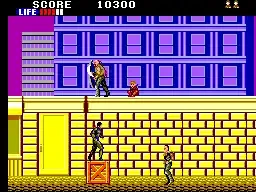
Play Shinobi (Japan) online! It is one of the top-rated SEGA Master System games you can play for free. No download, emulator, or setup required—jump straight into the action directly in your browser and start playing this classic in seconds.
Core Gameplay Mechanics and Difficulty
Shinobi introduced players to a thrilling world of stealth and action, setting a high standard for ninja-themed games. Players control Joe Musashi, a skilled ninja charged with rescuing kidnapped students from the criminal organization, Zeed. One of the standout features was the combination of platforming and combat, allowing players to engage in both fierce battles and intricate navigation through various levels. This balance created a challenging experience as players had to master not only Joe’s combat skills but also his agility to avoid traps and enemies.
The game’s level design introduced environmental hazards such as spikes and fire traps that tested players’ reflexes, amplifying the difficulty. Enemies varied in their attacks and required different strategies to defeat, adding layers of depth to the gameplay. Players often found themselves returning to earlier levels to improve their scores, showcasing the game’s lasting appeal through its challenging yet rewarding mechanics.
Historical Release Background and Innovations
Shinobi made its debut in 1987, released by SEGA in arcades, marking a significant moment in gaming history. Its success prompted an eventual port to the Master System and Mega Drive, expanding its reach. The game was notable for its use of a distinct art style and engaging soundtrack, both of which contributed to its memorable identity. Notably, it featured innovative gameplay mechanics such as the ability to use shurikens and special ninja skills, not commonly seen in games of that era.
The game’s introduction of a score system, linked with power-ups and abilities, was revolutionary, encouraging competitive play among friends. This innovative approach influenced many future titles, establishing a template for action games that blended scoring mechanics with combat and stealth elements. As such, Shinobi not only provided a dynamic experience but also laid the groundwork for the evolution of video game design.
Cultural Impact and Legacy
Shinobi became a cultural icon, deeply embedded in the fabric of 1980s gaming. Its influence can be seen in numerous sequels and spin-offs, including popular titles in the 90s and beyond. The game resonated with audiences for its unique theme and engaging storyline, ensuring its place in gaming history. Today, Shinobi remains a beloved title for retro gaming enthusiasts, symbolizing the golden age of arcade games and retaining a nostalgic charm that continues to captivate new generations.
In conclusion, the legacy of Shinobi lies in its exceptional blend of gameplay mechanics, historical significance, and enduring cultural impact. Its challenges and innovations have inspired countless games, making it a noteworthy title in the pantheon of video gaming. As retro gaming continues to thrive, titles like Shinobi remind us of the creativity and excitement that defined early arcade experiences, ensuring that its legacy will last for years to come.