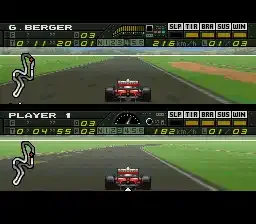
Play Human Grand Prix (Japan) online! It is one of the top-rated Super NES games you can play for free. No download, emulator, or setup required—jump straight into the action directly in your browser and start playing this classic in seconds.
Unleashing Speed and Tactics
The classic racing game, Human Grand Prix, carved its niche in the annals of retro gaming history by combining strategic depth with fast-paced action. Released in Japan during the early 1990s for the Super Famicom, it stood out not just for its exhilarating gameplay but also for its innovative approach to formula racing. Players found themselves not just competing against opponents, but also managing vehicle upgrades and fuel levels, adding a layer of strategy that enhanced the racing experience.
A Historical Perspective on Racing Games
Human Grand Prix debuted in 1992 and represented a pivotal moment for racing games. During this era, the genre was evolving rapidly, shifting from simplistic arcade experiences to more complex simulations that required skill and strategy. One aspect that distinguished Human Grand Prix was its focus on realism and the diversity of its racing circuits. With tracks that mimicked real-world locations, players were immersed in an authentic racing environment.
Moreover, the game featured an impressive roster of cars and detailed graphics for its time. It paved the way for future racing titles to adopt similar mechanics, influencing games that followed. The adaptability in gameplay, coupled with challenging difficulty levels, kept players engaged for hours, allowing them to hone their skills and strategize, a hallmark that resonates with veteran gamers even today.
Technical Innovations
One of the standout features of Human Grand Prix was its use of advanced programming techniques for the era. The game employed Mode 7 graphics, which created an impressive sense of speed and depth perception as players raced through 3D environments. This groundbreaking approach not only enhanced the visual presentation but also significantly influenced the design of future racing titles, blending speed with strategic depth.
Legacy and Cultural Impact
Decades later, Human Grand Prix is still celebrated for its unique blend of speed, tactics, and authenticity in racing. The game’s influence can be seen in many modern titles where tactical elements are regularly integrated into racing mechanics. Fans of retro gaming fondly remember the title for its challenge and innovation, ensuring its status as a beloved classic. The community around the game continues to thrive, with discussions and remakes paying homage to this cherished piece of gaming history.
As a foundation for the racing genre, Human Grand Prix remains a significant touchstone, illustrating how retro games can blend fun with strategic depth, leaving a legacy that intrigues and inspires players to this day.