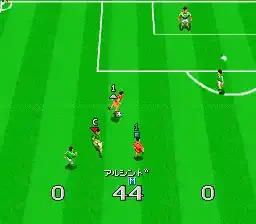
Play J.League Super Soccer (Japan) online! It is one of the top-rated Super NES games you can play for free. No download, emulator, or setup required—jump straight into the action directly in your browser and start playing this classic in seconds.
Understanding the Gameplay Mechanics
J.League Super Soccer set itself apart through its innovative gameplay mechanics that captivated fans during the early ’90s. Players could experience a robust simulation of soccer, where tactics played as significant a role as skills. The game featured complex ball physics, allowing for a variety of shots and passes that felt realistic. One of the standout mechanics was the inclusion of team management options, providing players the ability to create strategies and manage player stamina throughout matches. This level of control was relatively advanced for its time, making it a standout amongst its peers.
Difficulty levels were notably challenging—players faced teams that utilized strategic AI, requiring them to think critically about their approach. This element of strategic gameplay, combined with an arcade-style interface, made each match a unique experience. Gamers found themselves not just playing to win; they were engrossed in the unfolding drama of every game, whether thwarting an opposing player’s advance or executing a perfect counter-attack.
The Historical Relevance and Design Innovations
Released in 1993 for the Super Famicom (originally known as the Super Nintendo), J.League Super Soccer was a pioneer in blending arcade-style gaming with simulation elements. The game arrived at a time when soccer was burgeoning in popularity, particularly due to the formation of the J.League. This connection to real-world events gave the game a unique cultural resonance. Its release coincided with increased interest in Japanese football, and for many players, it served as an introduction to the teams, players, and culture of soccer in Japan.
Technically, the game pushed boundaries with its vibrant graphics and dynamic player animations. It also paved the way for various soccer games that followed, influencing the mechanics and aesthetics of future titles. Fans were drawn in not only by the gameplay but also by the authentic representation of various clubs, which helped cultivate a dedicated following. This emphasis on realism made it a beloved entry in the sports gaming genre.
Lasting Impact on Soccer Gaming
Today, the legacy of J.League Super Soccer continues to inform the evolution of sports video games. Its innovative mechanics and attention to realism paved the way for future masterpieces in the genre. From tactical team management to realistic ball physics, many features first pioneered here can still be seen in modern titles, showcasing its lasting impact on gaming culture.
As nostalgia for retro gaming grows, J.League Super Soccer remains a gem in the archives of gaming history. It encapsulates an era when games were not just about competition, but storytelling and cultural connection, making it a nostalgic favorite for many enthusiasts around the globe.