Play Rival Turf (USA) online! It is one of the top-rated Super NES games you can play for free. No download, emulator, or setup required—jump straight into the action directly in your browser and start playing this classic in seconds.
Introduction to Rival Turf
With its debut in the early ’90s, Rival Turf introduced gamers to a vibrant world of brawling and camaraderie that defined a generation. Released by Jaleco, this beat ’em up title blended traditional gameplay with unique character designs and a catchy soundtrack, capturing the hearts of players in arcades and living rooms alike. In an era dominated by intense competition, this game stood out by offering engaging multiplayer experiences and narrative depth.
Gameplay Mechanics and Innovation
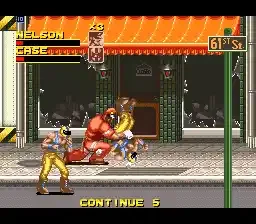
Rival Turf distinguishes itself through its cooperative gameplay, allowing players to team up and fight against waves of adversaries. Each character boasts distinct abilities and fighting styles, making strategy the key to success. The game utilizes a side-scrolling format reminiscent of classics but adds a layer of storytelling rarely seen in its peers. Players navigate through urban landscapes, battling various foes, which makes the experience thrilling yet challenging.
The difficulty curve is notable; while beginners may find early levels accessible, later stages progressively test one’s skills and timing. The unique combo system encourages players to experiment with different attacks, creating a sense of satisfaction when defeating tougher foes. Such mechanics contributed to the title’s lasting appeal, as players sought to master the intricacies of combat.
A Historical Perspective
Released in 1992 for the Super Nintendo Entertainment System (SNES), Rival Turf came during a golden age of gaming when beat ’em ups were soaring in popularity. The game’s design was revolutionary for its time, incorporating anime-inspired graphics and fluid animations that captivated the audience. Furthermore, its release marked Jaleco’s ambition to compete in a saturated market filled with heavyweights like Capcom and Konami.
The title’s cultural impact is undeniable, as it not only entertained players but also inspired countless sequels and spin-offs. The game’s portrayal of urban life and gang rivalry resonated with fans, solidifying its place in retro gaming history. Today, it stands as a nostalgic reminder of a simpler era in gaming and continues to be celebrated by enthusiasts at retro gaming conventions and online forums.
Legacy and Enduring Popularity
The legacy of Rival Turf is firmly rooted in the innovations it introduced. From its complex character dynamics to a cooperative multiplayer experience, the game laid groundwork for future titles in the genre. It remains a beloved classic due to its compelling gameplay, vibrant aesthetics, and deep-rooted nostalgia, ensuring its place in the hearts of gamers.
Conclusion
In retrospect, Rival Turf is not merely a game of punches and kicks; it is a cultural artifact that reflects the creativity and spirit of the early ’90s. Its enduring popularity can be credited to the nostalgic memories it evokes, along with the innovative gameplay that appealed to a diverse audience. As we continue to revisit these classics, Rival Turf reminds us why we fell in love with video games in the first place.