Play Super Keiba (Japan) online! It is one of the top-rated Super NES games you can play for free. No download, emulator, or setup required—jump straight into the action directly in your browser and start playing this classic in seconds.
Unveiling the Gameplay Mechanics
At the heart of Super Keiba lies a unique blend of strategy and skill that revolutionized horse racing games in the early ’90s. Players take on the role of a horse trainer, managing not just the steeds but also the races in which they compete. The mechanics are straightforward yet demanding: players must breed, train, and race their horses, balancing various attributes such as speed, stamina, and temperament. This intricate system encourages tactics that go beyond mere racing, inviting players to consider their horses’ training regimens carefully and strategize their race entries.
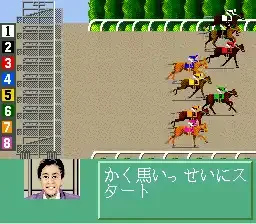
What truly set the game apart was its use of real-time racing dynamics coupled with an intuitive betting system. Spectators would place bets on horses, making for an immersive experience that mimicked the excitement of actual horse racing events. The challenge lies not only in winning races but in anticipating the competition and managing your resources wisely, creating a rich environment of decision-making that players still cherish.
A Historical Perspective
Originally released in Japan in 1991, Super Keiba introduced players to a vibrant world that showcased the cultural significance of horse racing within Japanese society. The game emerged during an era when arcade games were evolving dramatically, balancing graphical fidelity with engaging storytelling. The stunning pixel art and catchy soundtracks captured the essence of racing culture, appealing to both gamers and horse racing fans alike.
During its peak, the game not only entertained but also influenced a generation of developers. Its design innovations, such as detailed character statistics and a comprehensive racing calendar, became a blueprint for future titles in the genre. Notably, Super Keiba paved the way for more complex management systems in video games, setting a precedent that would be emulated in various simulation games across platforms.
The Legacy of Super Keiba
Even decades after its initial release, Super Keiba remains a beloved title in retro gaming circles. Many fans fondly recall the thrill of racing and the emotional connections formed with their virtual horses. The game’s integration of strategy within a sport setting continues to inspire modern titles, demonstrating its long-lasting impact on the gaming landscape.
In conclusion, Super Keiba stands out not only as a gaming classic but also as a landmark that helped to shape the future of simulation games. From its intricate gameplay mechanics to its rich cultural significance, this game has left an indelible mark in the hearts of players, ensuring that it is not forgotten. Today, it reminds us of the joy of old-school gaming and the emotional narratives that video games can convey.