
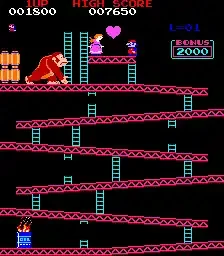
Play Donkey Kong (US set 1) online! It is one of the top-rated Arcade games you can play for free. No download, emulator, or setup required—jump straight into the action directly in your browser and start playing this classic in seconds.
Core Gameplay Mechanics and Difficulty
Donkey Kong, released in 1981, revolutionized the platforming genre with its unique gameplay mechanics. Players control Mario as he scales obstacles to rescue a princess from the titular ape. The primary mechanics involve jumping over barrels, avoiding enemies, and navigating ladders and platforms, all while racing against time. The game’s increasing difficulty is notable; as levels progress, more barrels and obstacles threaten to thwart players’ attempts.
Each level introduces new challenges that require quick reflexes and strategic planning. The introduction of moving platforms and enemy placement keeps players on their toes, creating a compelling mix of tension and skill. **Donkey Kong** is often cited for its precision in controls, allowing for deliberate movements essential for mastering its challenges. This balance of difficulty and reward solidified its status as a cornerstone in gaming history.
Historical Release Background and Design Innovations
Originating from Nintendo, **Donkey Kong** was a pioneer in the arcade gaming scene. Designed by Shigeru Miyamoto, it was not only one of the first games to feature a story but also a female protagonist. This was a significant shift from the era’s typical gaming narratives. The game’s revolutionary use of vertical space contrasted with the horizontal designs prevalent at the time, allowing players to think beyond the conventional platforming framework.
Furthermore, **Donkey Kong** utilized cutting-edge technology for its time, incorporating complex graphics and engaging sound effects. The iconic theme music became instantly recognizable, further enhancing the immersive experience. The successful launch led to numerous ports and adaptations across consoles, solidifying its impact on the gaming industry. Today, it is often regarded as a landmark title, leading to franchises and sequels that still thrive.
Cultural Impact and Long-Term Legacy
The cultural significance of **Donkey Kong** extends beyond the arcade. It became a defining symbol of early video gaming, influencing countless titles and spurring the growth of the platforming genre. Mario, originally known as “Jumpman,” quickly became a beloved gaming icon, setting the stage for a multibillion-dollar franchise. The game’s popularity also sparked merchandise and spin-offs, embedding it in the fabric of pop culture.
Even decades later, **Donkey Kong** remains relevant. It is periodically re-released on modern platforms and is a staple in retro gaming discussions, reminding players of the rich history of video games and the simplicity that still captivates audiences today.
Conclusion
In summary, **Donkey Kong** is not just an arcade classic; it’s a testament to innovation in game design and storytelling. Its engaging gameplay and rich history continue to inspire a new generation of players and developers alike. The legacy of this game is a celebration of creativity and nostalgia, ensuring that it will always hold a cherished place in our hearts. As we look back, it’s clear that **Donkey Kong** set the foundation for many of the gaming experiences we enjoy today.
![The King of Fighters 2002 Magic Plus II (bootleg) [Bootleg]](https://www.retrogames.me/wp-content/uploads/the-king-of-fighters-2002-magic-plus-ii-bootleg-bootleg-150x150.webp)




Why is evryone making fun of my name