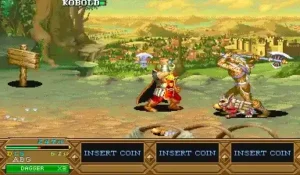
Play Dungeons & Dragons – tower of doom (940412 Hispanic) online! It is one of the top-rated Arcade games you can play for free. No download, emulator, or setup required—jump straight into the action directly in your browser and start playing this classic in seconds.
Core Gameplay Mechanics and Difficulty
The Dungeons & Dragons arcade game, known for its thrilling cooperative gameplay, captures the essence of tabletop role-playing. Players can choose between various character classes, each with unique abilities and magical skills, ensuring diverse strategies during quests. The game encourages teamwork as players navigate dungeons filled with foes, traps, and treasures, often requiring players to balance their strengths and weaknesses effectively.
The difficulty is notable—players face a range of challenges that demand quick reflexes and strategic thinking. Enemies grow tougher as players progress, pushing adventurers to adapt quickly. This blend of challenge and cooperation keeps excitement high, allowing for memorable and engaging gameplay moments, and defining features that distinguish it as a classic in arcade history.
Historical Release Background
Released in 1993, this game marked a pivotal moment in the integration of tabletop gaming into the arcade realm. It was one of the first to translate the beloved Dungeons & Dragons mechanics into an interactive, visually rich format. The developers aimed to offer fans a chance to experience the thrill of dungeon crawling without needing a group of friends gathered around a table. At its launch, the game turned heads with its vibrant graphics and captivating soundtrack—features that were groundbreaking for the era.
Furthermore, the collaboration with the renowned Dungeons & Dragons franchise helped it gain traction among fans of the genre. It successfully introduced a new generation to the intricacies of role-playing games, making it a significant title in the evolution of both arcade gaming and tabletop genres. The nostalgic factors tied to its gameplay also ensure it remains a cherished memory for many long-time gamers.
Cultural Impact and Long-Term Legacy
The impact of the Dungeons & Dragons arcade game extends beyond its gameplay mechanics. It sparked interest in RPGs among a broader audience and contributed to the wider pop culture surrounding fantasy themes in gaming. Today, its legacy can be seen in numerous remakes, sequels, and references in modern games, solidifying its status as a cornerstone of retro gaming. The unique combination of adventure and camaraderie it fosters continues to resonate with players, proving its timeless appeal.
In conclusion, the enduring popularity of Dungeons & Dragons highlights its significant role in gaming history. With its challenging gameplay, innovative design, and rich cultural influence, this arcade classic remains a vital touchstone for both old-school fans and newcomers alike. Revisiting this iconic piece of gaming history not only ignites nostalgia but also serves as a reminder of the foundational experiences that shape gaming culture today.
![The King of Fighters 2002 Magic Plus II (bootleg) [Bootleg]](https://www.retrogames.me/wp-content/uploads/the-king-of-fighters-2002-magic-plus-ii-bootleg-bootleg-150x150.webp)