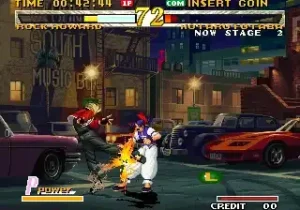
Play Garou – Mark of the Wolves (NGM-2530) online! It is one of the top-rated Arcade games you can play for free. No download, emulator, or setup required—jump straight into the action directly in your browser and start playing this classic in seconds.
Unraveling the Gameplay of Garou
Garou revolutionized the fighting game genre with its innovative mechanics and emphasis on strategic depth. Unlike many of its predecessors, this title introduced a unique three-level “Tactical Offensive” system, allowing players to unleash devastating combinations and special moves more fluidly. The combat isn’t simply about button mashing; timing becomes essential as players engage in an intricate dance of offense and defense. Each fight challenges players to adapt their strategies, ensuring that mastering the game takes both skill and practice.
The difficulty is tailored to both newcomers and seasoned players. Newcomers are greeted with accessible controls, while veterans find a robust challenge in dedicated competitive play. The characters are diverse, each with unique abilities and fighting styles, encouraging experimentation and mastery. With a hyper-responsive control scheme and rich animations, Garou encapsulates the finely tuned gameplay that makes fighting games exhilarating and rewarding.
The Historical Significance of Garou
Released in 1999 for the Neo Geo, Garou stands as a landmark title in the history of fighting games. Developed by SNK, it was a significant departure from the common tropes of the genre, focusing on deep character development and intricate storylines. Its striking art style and detailed backgrounds brought a new aesthetic to the fighting game scene, making it visually striking and memorable.
In addition to its impressive graphics, Garou is notable for its focus on balance and competitive play. This mathematics behind character creation ensured that no single fighter was overpowered, allowing for a more dynamic multiplayer experience. As a result, Garou quickly became a staple in professional gaming circuits and continued to influence subsequent titles in the genre. Its legacy endures, inspiring countless developers to push the boundaries of fighting game mechanics and visual storytelling.
Cultural Impact and Legacy
Garou has left an indelible mark on gaming culture. It’s celebrated in competitive communities, and its characters have endured in various forms of media, from anime to merchandise. Nostalgia keeps it alive, with remastered versions popular among both old fans and new players alike. It has established itself as a classic that embodies the spirit of late ’90s arcade gaming.
Conclusion
In summary, Garou remains a touchstone in the world of fighting games, revered for its gameplay innovations and rich historical context. The strategic depth, balanced mechanics, and memorable characters contribute to its lasting popularity in gaming communities. Whether you’re a fighting game enthusiast or just beginning your journey, the influence of Garou is a testament to its enduring appeal and significance in video game history.
![The King of Fighters 2002 Magic Plus II (bootleg) [Bootleg]](https://www.retrogames.me/wp-content/uploads/the-king-of-fighters-2002-magic-plus-ii-bootleg-bootleg-150x150.webp)