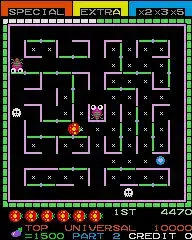
Play Lady Bug online! It is one of the top-rated Arcade games you can play for free. No download, emulator, or setup required—jump straight into the action directly in your browser and start playing this classic in seconds.
Introduction to Lady Bug
Originally released in the 1980s, Lady Bug is a classic arcade game that continues to captivate enthusiasts of retro gaming. Combining innovative gameplay mechanics with charming graphics, this title stands out in a landscape filled with platformers and shooters. Players guide a ladybug through a garden maze, evading predators while collecting flowers and power-ups. Its unique design elements and strategic depth have earned it a special place in gaming history, making it a beloved choice for both nostalgic players and new fans alike.
Core Gameplay Mechanics and Difficulty
The gameplay of Lady Bug revolves around navigating a maze dotted with flowers, all while avoiding various enemies. Players must cleverly maneuver the ladybug through the garden, changing colors to unlock additional pathways and double their score on flower collection. This simple yet engaging mechanic creates layers of strategy, as players need to time their movements to avoid enemies and maximize their point tally. The difficulty increases with each level, making the game progressively challenging while ensuring that the core experience remains exhilarating and rewarding.
Innovative Design Elements
Among its notable features, Lady Bug introduced directional movement into the maze format, allowing players to navigate not just up and down but also incorporate lateral movements. The ability to change the maze’s layout adds to the game’s strategic depth, differentiating it from contemporaries that relied on static designs. This innovation paved the way for future titles, highlighting the importance of adaptability in gaming experiences.
Cultural Impact and Legacy
Despite its age, Lady Bug holds a significant place in the lore of arcade gaming. Its simple graphics and engaging gameplay have made it a favorite in retro gaming communities. The charming premise of guiding a ladybug through gardens resonates with players seeking a blend of nostalgia and challenge. The title has appeared in various compilations and collections, ensuring that new generations experience its unique charm. Furthermore, its influence can be observed in newer titles that borrow from its mechanics and concepts, cementing its legacy as a pioneer in the maze genre.
Conclusion
The enduring appeal of Lady Bug lies in its innovative gameplay and historical significance within the arcade genre. Nostalgic players and newcomers alike can appreciate its blend of strategy and charm, proving that great game design can transcend time. As the gaming industry continues to evolve, titles like Lady Bug remind us of the creativity and spirit that defined early video games, ensuring its legacy for years to come.
![The King of Fighters 2002 Magic Plus II (bootleg) [Bootleg]](https://www.retrogames.me/wp-content/uploads/the-king-of-fighters-2002-magic-plus-ii-bootleg-bootleg-150x150.webp)