
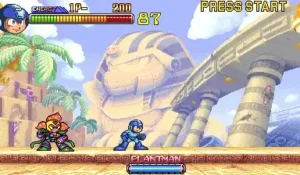
Play Mega Man 2 – the power fighters (960708 USA) online! It is one of the top-rated Arcade games you can play for free. No download, emulator, or setup required—jump straight into the action directly in your browser and start playing this classic in seconds.
Introduction
The iconic Mega Man 2 not only defined a generation of platforming games but also introduced innovative mechanics that resonated deeply with players. Released in 1988 for the NES, this sequel took the foundation laid by its predecessor and elevated it, showcasing Capcom’s prowess in crafting compelling gameplay experiences. With its rich visuals, memorable music, and challenging gameplay, it remains a beloved classic in the retro gaming community.
Gameplay Mechanics and Difficulty
Mega Man 2 is widely celebrated for its streamlined gameplay mechanics that combine precision platforming with thrilling action sequences. Players control Mega Man, navigating through diverse levels filled with unique enemies and tricky obstacles. The game introduced the **Robot Master** system, where defeating each boss grants Mega Man new abilities, encouraging players to experiment and strategize. The challenge of mastering each level while adapting to different abilities adds layers of depth and engagement. The game’s difficulty is another hallmark, demanding skill and patience, pushing players to refine their strategies. From the electrifying atmosphere of the **Flash Man** stage to the daunting hurdles of **Quick Man**, Mega Man 2’s difficulty remains iconic.
Historical Release Background
Released in the United States on July 8, 1990, Mega Man 2 quickly garnered acclaim, becoming one of the best-selling games on the NES. It was Capcom’s response to the growing competition in the gaming market, and the team embraced a philosophy of **iterative design**. The result was a game that improved upon its predecessor in virtually every way, from enhanced graphics to refined controls. With the addition of **energy tanks** for extra lives and an **option menu** for players to select their order of attack, the sequel addressed many concerns players had with the original. This blend of innovation and nostalgia has helped Mega Man 2 endure as a standout title in gaming history.
Cultural Impact and Legacy
Mega Man 2’s influence extends far beyond the NES library, inspiring countless sequels and spin-offs, as well as a thriving franchise that includes comics and animated series. Its soundtrack, composed by Takashi Tateishi, is often cited among the greatest in video game history. Even decades later, Mega Man 2 continues to inspire developers and students in game design with its remarkable balance of challenge and empowerment.
Conclusion
In a gaming landscape that often shifts with trends, the lasting legacy of Mega Man 2 is a testament to its design and innovation. The combination of challenging gameplay, unique mechanics, and cultural impact solidified its place in the hearts of retro gaming enthusiasts. Today, it stands not just as a relic of the past but as a benchmark for quality in game design, reminding players of the joy and challenge that video games can offer.
![The King of Fighters 2002 Magic Plus II (bootleg) [Bootleg]](https://www.retrogames.me/wp-content/uploads/the-king-of-fighters-2002-magic-plus-ii-bootleg-bootleg-150x150.webp)

This Game is Really Cool and Chalenging I Like It