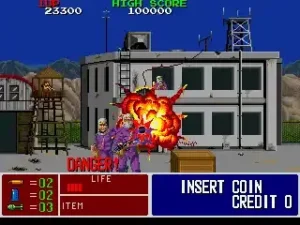
Play Operation Thunderbolt (US, older) online! It is one of the top-rated Arcade games you can play for free. No download, emulator, or setup required—jump straight into the action directly in your browser and start playing this classic in seconds.
Introduction
The arcade classic, Operation Thunderbolt, took the gaming world by storm in the late 1980s, captivating players with its intense action and cooperative gameplay. As a follow-up to the beloved game “Operation Wolf,” this title not only enhanced its predecessor’s mechanics but also set new standards for light gun games. Players were thrust into action-packed scenarios where quick reflexes and teamwork were paramount, creating an exhilarating experience that has left an indelible mark on gaming history.
Gameplay Mechanics and Difficulty
In Operation Thunderbolt, players assume the roles of commandos navigating through diverse and challenging environments, battling hordes of enemies while rescuing hostages. The game is notable for its innovative use of light gun technology, allowing players to aim and shoot at the screen, a mechanic that felt remarkably immersive for its time. The gameplay is designed for two players, enhancing its cooperative elements and fostering friendly competition. Each level presents escalating difficulty, encouraging players to refine their skills, learn enemy patterns, and strategize effectively. Boss battles were introduced to heighten the challenges, making every victory feel earned.
Historical Significance and Cultural Impact
Launched by Taito in 1988, Operation Thunderbolt is a direct evolution of its predecessor, representing a pivotal moment in arcade gaming. This title not only popularized the light gun genre but also showcased advancements in graphic design and sound, creating a more immersive experience. As arcades thrived during the late ’80s, games like Operation Thunderbolt became crucial social hubs, where players gathered to hone their skills and share tips. The game’s legacy extended beyond the arcades, inspiring a range of home console ports and sequels, ensuring its place in the pantheon of retro gaming classics.
Notable Features and Long-Lasting Legacy
- Innovative light gun mechanics that influenced future titles
- Cooperative gameplay enhancing social interactions
- Diverse levels with varying difficulty to challenge players
Today, Operation Thunderbolt is fondly remembered not just for its gameplay but also for its impact on the arcade culture of the time. Its design innovations and cooperative elements paved the way for many modern shooters, reflecting the spirit of camaraderie and competition that defined the golden age of video gaming.
Conclusion
Reflecting on Operation Thunderbolt offers not only a nostalgic trip down memory lane but also an appreciation for how far gaming has come. Its successful integration of engaging gameplay, cooperative dynamics, and technological advancements created a lasting impact that resonates even today. For anyone interested in the roots of interactive entertainment, this classic title remains a significant piece of gaming history, embodying the thrill and joy of arcade play.
![The King of Fighters 2002 Magic Plus II (bootleg) [Bootleg]](https://www.retrogames.me/wp-content/uploads/the-king-of-fighters-2002-magic-plus-ii-bootleg-bootleg-150x150.webp)