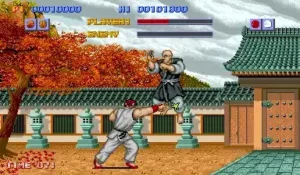
Play Street Fighter (US set 1) online! It is one of the top-rated Arcade games you can play for free. No download, emulator, or setup required—jump straight into the action directly in your browser and start playing this classic in seconds.
Exploring the Gameplay Mechanics of Street Fighter
The gameplay of Street Fighter was revolutionary, marking a significant shift in the fighting game genre. Introducing a diverse cast of characters, each with unique move sets and fighting styles, players were encouraged to master their favorites while developing strategies against others. The game utilized a six-button configuration, allowing for intricate combinations and special moves. This complexity made battles both competitive and deeply engaging, appealing to casual gamers and seasoned pros alike. Choosing a character like Ryu or Chun-Li not only impacted gameplay but also offered players chances to explore rich backstories and techniques.
This early iteration also introduced the iconic “hadouken” move, which became a staple of the franchise. The accompanying challenge of timing and positioning kept players on their toes, ensuring that every round felt fresh. The game’s difficulty level, though steep, provided a rewarding experience as players honed their skills, ultimately leading to the game’s enduring popularity in local arcades and homes.
The Historical Context and Legacy of Street Fighter
First released in 1987 by Capcom, the original Street Fighter set the stage for a new era in gaming. At a time when arcade games were largely focused on fast reflexes and simple mechanics, this title introduced tactical fighting with its character-driven verses. Despite its initial mixed reviews, the game laid foundational elements that influenced its sequels and spurred the fighting genre’s growth into the 90s and beyond.
Many players fondly recall bustling arcades where competitions ignited friendships and rivalries, reinforcing the social aspect that defined Street Fighter‘s appeal. The game’s impact was palpable, leading to the establishment of professional tournaments and a global community passionate about mastering combos and strategies. Still, the original’s influence pervades modern gaming, as it inspired countless creators and competitors looking to capture the magic of those early battles.
Why Street Fighter Remains a Cultural Icon
For more than three decades, Street Fighter has continuously captivated fans through revisions, remakes, and sequels. Its timeless characters and gameplay innovations resonate across generations, ensuring the game’s longstanding presence in popular culture. The franchise not only transformed gaming but also inspired movies, anime, and merchandise, solidifying its role in the entertainment landscape.
Conclusion
The enduring legacy of Street Fighter is a testament to its groundbreaking gameplay and cultural impact. As both a pioneer of the fighting game genre and a beloved part of gaming history, its influence continues to be felt today. For newcomers and long-time fans alike, revisiting this quintessential title offers a nostalgic journey into the roots of competitive gaming, showcasing why it remains a significant cornerstone in the evolution of video games.
![The King of Fighters 2002 Magic Plus II (bootleg) [Bootleg]](https://www.retrogames.me/wp-content/uploads/the-king-of-fighters-2002-magic-plus-ii-bootleg-bootleg-150x150.webp)