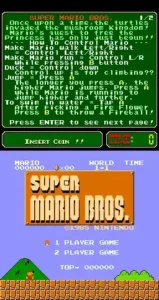
Play Super Mario Bros. (PlayChoice-10) online! It is one of the top-rated Arcade games you can play for free. No download, emulator, or setup required—jump straight into the action directly in your browser and start playing this classic in seconds.
Core Gameplay Mechanics and Difficulty
Super Mario Bros. introduced players to an innovative side-scrolling platform experience that would redefine the genre. With its simple yet captivating mechanics, players navigate Mario through vibrant worlds filled with iconic enemies, power-ups, and obstacles. The game features intuitive controls that make it accessible to newcomers while presenting significant challenges for seasoned players. The varying difficulty levels, represented by different worlds and stages, maintain engagement and replayability. From the treacherous jumps to encountering Bowser, each level is meticulously designed to offer both a sense of achievement and occasional frustration, capturing the essence of classic gaming.
Historical Release Background
Released in 1985, Super Mario Bros. became a hallmark title for the Nintendo Entertainment System (NES) and had a pivotal role in revitalizing the gaming industry after the crash of 1983. As one of the first games developed by Shigeru Miyamoto, it showcased groundbreaking design techniques, including non-linear gameplay and hidden secrets. The game’s success was instrumental in establishing Nintendo as a dominant force in gaming. The PlayChoice-10 version allowed players to experience this classic in arcades, enhancing its visibility and popularity among a broader audience. The nostalgic allure of the game has endured through generations, making it a lasting part of gaming culture.
Cultural Impact and Long-term Legacy
The impact of Super Mario Bros. on popular culture cannot be overstated. It introduced an entire generation to video gaming, becoming synonymous with gaming itself. The character of Mario has evolved into a beloved icon, appearing in various media, merchandise, and even theme parks. This game laid the groundwork for countless sequels and spin-offs, establishing the franchise as a perennial favorite among players. Today, its influence persists in modern game design, inspiring countless developers to integrate similar mechanics and storytelling elements. The title remains not only a nostalgic benchmark but also a vital piece of gaming history.
Conclusion
In summary, Super Mario Bros. is not just an entertaining classic but a significant cultural artifact that shaped the gaming landscape. Its engaging gameplay mechanics and enduring legacy continue to resonate with players, old and new. As we celebrate this iconic title, it remains a testament to creativity and innovation in game development, ensuring its place in the hearts of gamers across the globe. Whether revisited in an arcade or played on a home console, this game will always hold a special place in the annals of gaming history.
![The King of Fighters 2002 Magic Plus II (bootleg) [Bootleg]](https://www.retrogames.me/wp-content/uploads/the-king-of-fighters-2002-magic-plus-ii-bootleg-bootleg-150x150.webp)